Off-road Vehicles
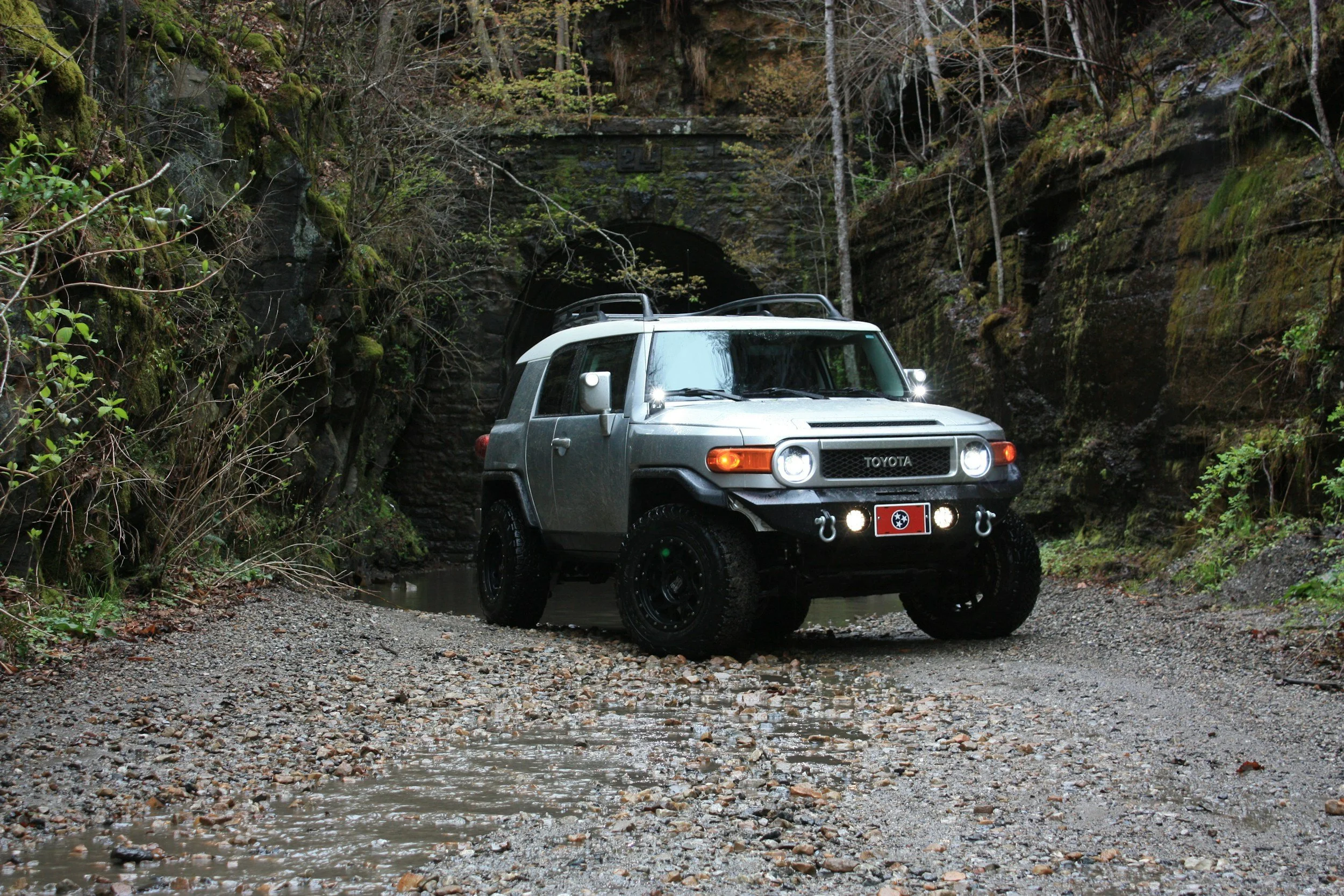
One of the fastest growing threats to the ANF derives from vehicular traffic in the forest, especially from off-road vehicles, including all-terrain vehicles (ATVs) and motorcycles, but also including ordinary trucks and cars. The increase in ATV and off-road motorcycle traffic are especially alarming. The very purpose of these vehicles is incompatible with good forest stewardship.
Principles
We, the members of the Friends of the Apalachicola National Forest, believe that the primary mission of the US Forest Service should be to keep the ecological integrity of the ecosystems under its care intact. We exist to encourage and support the Forest Service in this mission. To achieve this goal, we believe that every proposed use should first be subjected to the following test: will allowing the proposed use substantially degrade the ecosystem in the long run? We believe that application of this principle is not excessively restrictive, for it allows a large number of uses, including the extraction of forest products under certain management systems, various recreational activities, hunting, fishing, study, research and others.
The Apalachicola National Forest is a Biological Treasure
We emphasize that this forest is home to an exceptionally large number of plant and animal species, in fact, that it lies in one of the four biodiversity hotspots of the USA. A large part of this diversity resides in the fire-dependent ground cover vegetation, making these communities particularly sensitive indicators of ecosystem integrity. Any activities that degrade the groundcover vegetation therefore threaten the integrity of the ANF ecosystems. The ANF is a remnant of an almost-vanished ecosystem, the longleaf pine forest. Only a few percent of this once magnificent ecosystem is still functionally intact, and a large proportion of this is on the ANF.
Vehicular Access as a Threat to the Ecosystems of the ANF
One of the fastest growing threats to the ANF derives from vehicular traffic in the forest, especially from off-road vehicles, including all-terrain vehicles (ATVs) and motorcycles, but also including ordinary trucks and cars. The increase in ATV and off-road motorcycle traffic are especially alarming. The very purpose of these vehicles is incompatible with good forest stewardship. The growth of user-made roads, tracks and trails is by its very nature exponential--- each begets a certain number of new ones, so that the number grows by multiplication rather than addition. The final stages of degradation therefore occur in what seems like the blink of an eye. In the restricted areas of the ANF, the appearance of new travelways is approaching this limit, and in a few areas, has already exceeded it.
Vehicles and the tracks they make degrade the ecosystem by crushing vegetation, disturbing soil, fragmenting habitat, limiting the spread of ground fires, and exposing bare soil to invasion by exotic and invasive species. They also degrade the experience of being in a natural forest, visually and sonically, and rob those who seek solitude and quiet of the opportunity to find it. As degradation proceeds, trash dumping and vandalism follow in its tracks, attracting still more degradation by a variety of destructive behaviors.
We the member of the Friends of the Apalachicola National Forest therefore encourage the Forest Service to take the following actions with respect to vehicular access:
Ban all use of ATVs on the forest, except as needed by the US Forest Service to manage the forest. Many land owners, public and private, already do so, providing a precedent for the Forest Service to follow. ATVs can easily be used in a manner that degrades the forest ecosystem, and many owners clearly use them in this manner. Furthermore, ATVs are a relatively recent phenomenon, and cannot be regarded as having any sort of “standing” in the mix of vehicular users of the forest. The exponential growth of their use suggests that if not banned immediately, the US Forest service will not be able to exert any sort of control over them in the future.
Ban all off-road trail bikes from the forest. We believe this should be done in spite of the fact that Enduro races have been permitted on the ANF for years. These races have criss-crossed the forest with hundreds of miles of official trails and hundreds more of unofficial, user-made trails. There are many areas of the forest where a transect crosses such a trail every few hundred feet. In many areas, these trails are pitted, or deep ruts. Furthermore, they tend to attract ATV riders who widen and degrade the trails further.
Limit all vehicular traffic to a system of numbered roads, including the current road system, with the possible addition of a very few user-made tracks. Physicallyblock all closed roads and tracks.
Provide special protection for depression ponds and seasonal wetlands, because these precious ecotypes have been especially hard hit by mud-bogging and other vehicular degradation. This should include increased law enforcement and patrolling, as well as blocking access, signing, education in schools and clubs, and so on.
Immediately move to meet US Forest Service obligation to the Clear Lake Wilderness Study Area by closing the existing roads into and through it. It is our understanding that Wilderness Study Areas are, by law, managed as wilderness, and this requires the exclusion of motorized travel. User-made travelways have proliferated in this area as they have elsewhere.
Restrict forest entry to a limited number of access points, closing all others (perimeter control).
Clearly post the rules of access at major forest entry points, along with penalties for violations.
Once the new access policy takes effect, pursue its enforcement vigorously. It is our belief that the “culture” of forest users will change over a period of years as people accept the new rules and abide by them, but only if the Forest Service appears serious about these rules.