
Timber Management
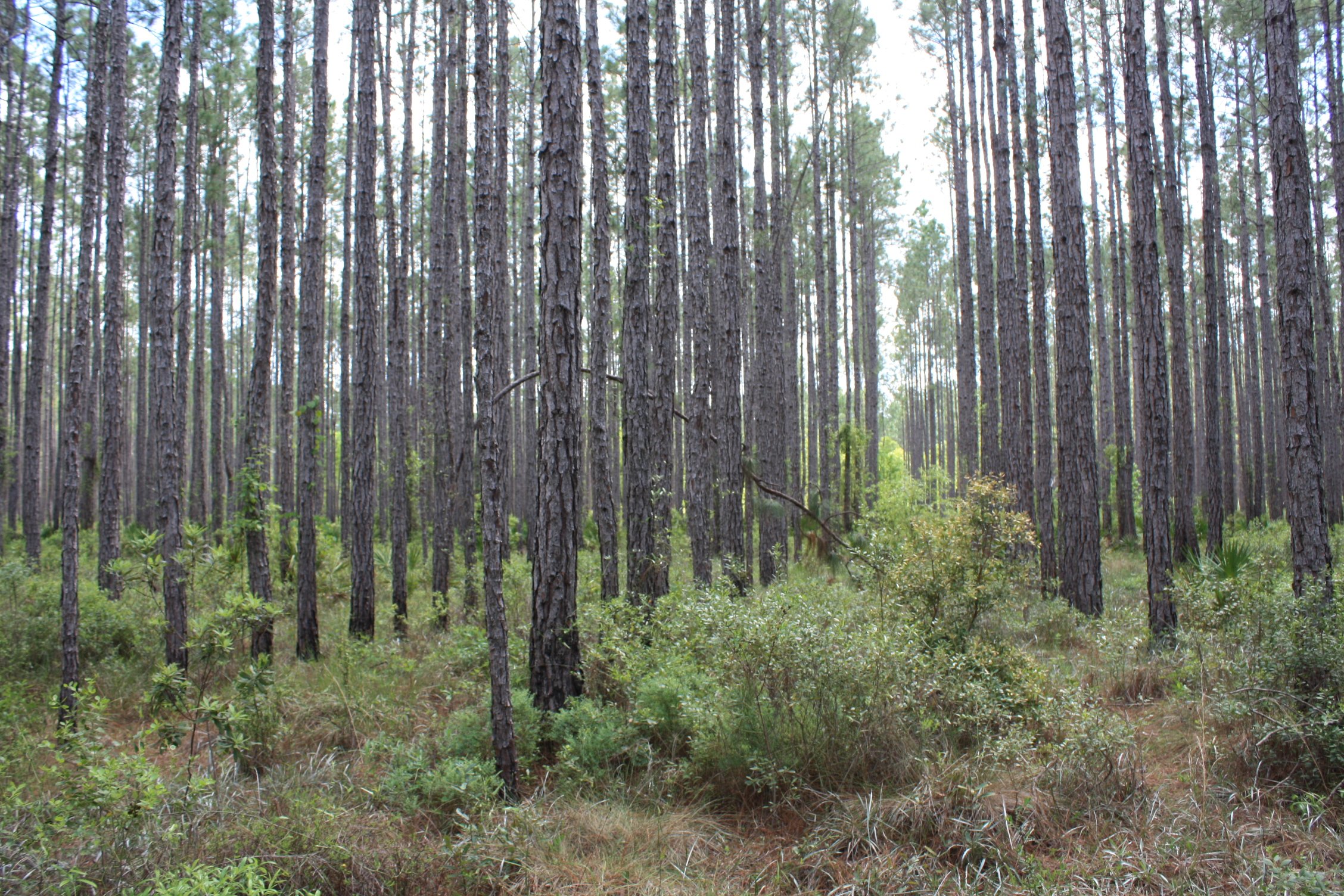
Under the 1999 plan (USDA Forest Service 1999), emphasis switched from clearcutting to uneven-aged management and from artificial regeneration to natural regeneration on the Apalachicola National Forest (ANF). Uneven-aged management involves selective harvest and natural regeneration within natural and created gaps. Restoring longleaf pine to sites planted in slash pine may involve clearcutting and replanting longleaf depending on a variety of factors. Given the critical role of fire in the longleaf pine ecosystem, care of groundcover is paramount in any timber operation.
Under the 1999 plan (USDA Forest Service 1999)[link to citation], emphasis switched from clearcutting to uneven-aged management and from artificial regeneration to natural regeneration. The number of acres treated by a regeneration system has dropped dramatically, and methods have changed. The plan suggests that the Apalachicola National Forest initiate uneven-aged management on 28,000 acres in the first 10 years of the plan and do about 40,000 acres of thinning and 8,000 acres of off-site slash conversion.
Units of several thousand acres at a time are selected for silviculture treatments, entering them at 10- or 20-year intervals. Surveys assess the sizes and densities of the trees, and timber markers paint trees to be taken. Contracts are given to private bidders. In some cases off-site slash-pine plantations will be removed by clearcutting, followed by some form of site preparation (fire, herbicides, or mechanical) and then planting of longleaf-pine seedlings. Some groundcover restoration may also take place, which would supplement the wiregrass or associated species. In others the forest is "thinned from below"; trees in the smaller size classes are removed. Recently the emphasis has been on "group selection," removal of 1/4- to 2-acre patches of trees intended to encourage longleaf-pine regeneration within a mature stand of trees. Through adaptive management, the Forest Service has been practicing a "modified group selection," which is really a thinning from below, and releasing established clumps of longleaf seedlings that are already established in the understory. These clumps are released by removal of extra trees around the opening where the seedlings are established. Another silvicultural method is the "irregular shelterwood method," a method of removal of all but a few seed trees (down to 25 square feet/acre of basal cross-sectional area of trees) so that the next mast year will allow a second generation of seedlings to become established. Once the seedlings are established, the overstory longleaf pines are reduced to approximately six trees/acre.